All articles tagged "sovereign-ai" : self-hosted AI fixes, setups, and architecture notes.
On June 13 2026 the US ordered Anthropic to cut off its strongest models for every foreign national on earth. The next day Microsoft's CEO published an essay telling companies to own their learning loop or lose it. Two events from opposite ends of the industry, one conclusion the sovereign-AI corner has been writing down for a year: if you do not control the substrate, you do not control the outcome.
Read article →

Giving a local 8B model persistent memory and retrieval good enough to replace a cloud assistant for daily coding. The architecture is mem0 plus a RAG knowledge base over ChromaDB. The honest part is the two bugs that made the first version forget you and answer the wrong question with full confidence.
The default AIDE configuration on Debian and Ubuntu selects the entire root filesystem, which means your tripwire is checksumming your home directory, your models, and your downloaded films every night. Here is how I caught it on a friend's machine and the scope file that fixed it.
Honest minute-by-minute log of building a friend's sovereign-AI workstation from a stock Lenovo with Windows to a fully self-hosted KI-stack with custom dashboard, MCP-routed RAG, and bidirectional cross-tailnet sharing. With the mistakes.
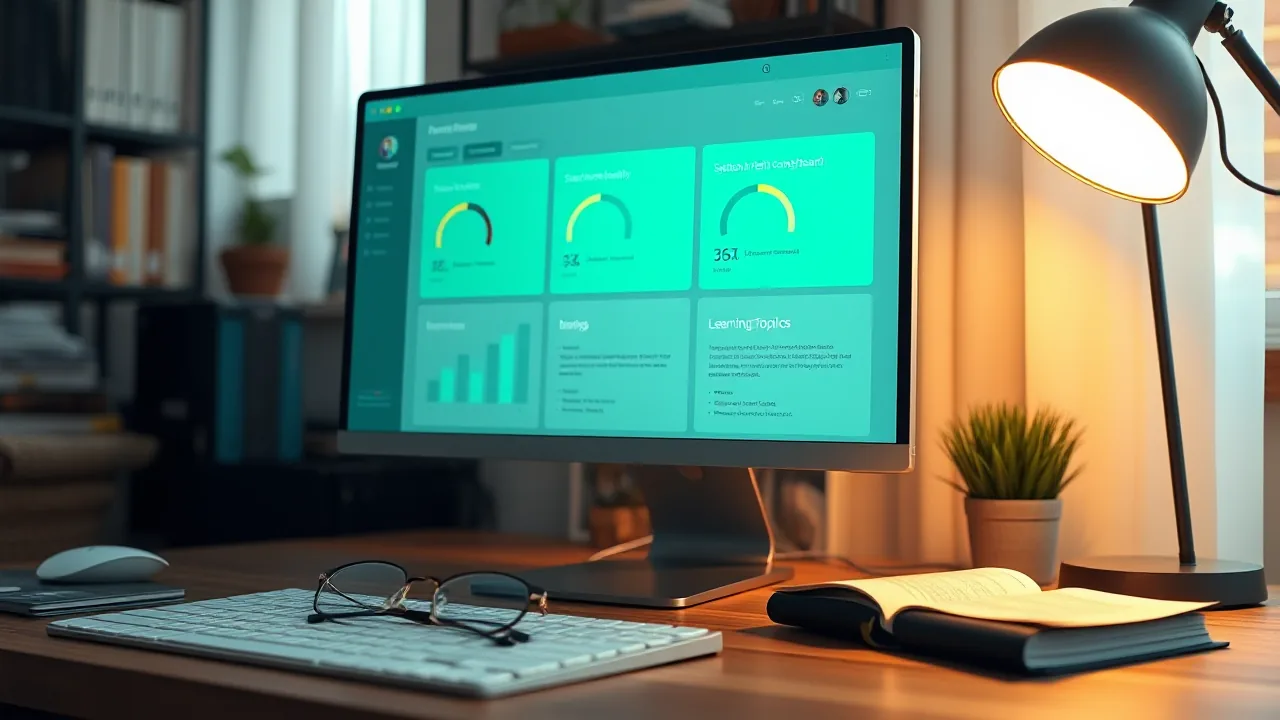
I had a 600-line dashboard that worked technically and went unopened socially. Rebuilding it as a teaching surface changed everything. This post is the design pattern: info-buttons on every metric, persona-cross-references on every model, a glossary tab that explains every acronym, and a doctor tab with one-button fixes. Sample backend and frontend code.
Most sovereign-AI guides assume the operator is the same person as the user. What changes when the operator is your friend who has zero Linux experience? The discipline is identity separation at every layer, default-local privacy, and a vibe-sustaining onboarding pattern that survives day three.
Family sysadmin usually means adding the friend or partner to your VPN. That breaks sovereignty quietly. The right primitive is two separate tailnets and one shared node, with an ACL that restricts what the friend sees to exactly the service they need.
An honest capability matrix between cloud Claude and a self-hosted GB10 stack across 13 tasks, plus the entry-points into the deeper-dive articles. Claude still leads on multi-step reasoning; the local stack now covers two things Claude cannot do at all.
The complete mechanism behind sovgrid.org: a DGX Spark on a desk drafting articles through a 35B-parameter Qwen quant, cloud Claude doing the architecture, AGENTS.md as the multi-agent contract, three independent quality gates, and a stylometric layer that landed after a forum auto-banned a post as AI spam. Ten weeks of milestones, the real numbers, the things that still do not work, the goal of eventually retiring the cloud layer entirely, and the entry point that ties it all together.
The complete stack that runs sovgrid.org and its consulting practice, component by component, with the reasoning for each pick and the alternatives I considered. Hub article. Updated 2026-05-25 after the Qwen primary migration, the Cloudflared retirement, the Astro 5 to 6 upgrade, and the switch.sh mutex pattern.
DFARS 252.204-7012, NIST SP 800-171 Rev 3, and CMMC 2.0 turn AI tooling into a controlled-data problem. Cloud AI vendors solve part of it contractually. Self-hosted on a DGX Spark solves it architecturally. Here is the scoping conversation for small-to-mid US defense contractors.
MiFID II, DORA, GDPR, and the SEC's evolving AI guidance all push financial-services firms toward AI deployments where the firm controls the model, the data, and the inference path. Self-hosted AI on a DGX Spark is the architectural answer; this is how to scope it.
Source protection is a threat-model problem, not a tooling preference. Sending a source's documents to a cloud AI vendor adds a new subpoena target and a new spyware vector. Self-hosted AI on a small on-premises box keeps the analysis inside the newsroom. Written for investigative reporters at mid-tier outlets, freelancers, and small newsrooms.
Attorney-client privilege is incompatible with most cloud AI deployments. A self-hosted DGX Spark restores the architectural property that the privilege has always required. Here is the case for law firms considering sovereign AI, with the specific concerns about discovery, work product, and ethics rules.
Public-sector AI pilots are an architectural-sovereignty problem disguised as a procurement problem. The cloud AI vendors' contracts cannot fully satisfy data-residency obligations, sovereign-cloud requirements, or the political accountability that public-sector deployments require. Self-hosted is the answer; here is the scoping conversation.
A 20-to-500-employee manufacturer has different AI constraints than a Fortune 500 plant. Shop-floor networks are segmented for IEC 62443 reasons, ISO 9001 audit trails follow every document, and ITAR or CMMC may apply if you serve defense. Self-hosted AI on a single inference box fits the constraints; cloud AI typically does not. Written for family-owned shops modernizing.
A practical guide for healthcare organizations evaluating sovereign AI deployment. Which compliance burdens self-hosting removes, which it adds, and the specific regulatory citations that govern the decision. Written for the CISO who is asking the right questions.
The word 'sovereign' has been generalized into uselessness by 2026 marketing. Six concrete tests separate sovereign from sovereign-flavored, with worked examples from the operating log of a stack that just moved from 5/6 to 6/6 on the framework below.
A Tor hidden service in front of a sovereign-AI endpoint is the right answer for three specific reader populations and the wrong answer for everyone else. Here is how to tell which population you are in, and the configuration if you are.