Sovereign AI for Journalists
Update (2026-06-19). The “Qwen 3.6 PrismaQuant” references here predate the 2026-06-11 production switch to AutoRound int4-mixed (69.2 tok/s, 12.7 percent better on the coding gate, vision retained, PrismaQuant retired). The figures are kept as the engineering-log record; the live stack is on /stack/ and the switch is measured in AutoRound int4 vs PrismaQuant.
The short answer for an investigative journalist: every cloud AI service you give a source’s documents to is one more party in your discovery chain and one more set of logs a subpoena or a court order can reach. The Reporters’ Privilege protections in the United States vary by state and are uneven under federal law. The EU Whistleblower Directive has been transposed in all 27 member states but no member state was assessed as fully compliant in the Commission’s 2024 conformity report. The architectural answer is to keep the documents and the analysis inside the newsroom, on hardware the newsroom controls. A single sub-$5k inference box runs the models that handle most document-analysis work, with no outbound traffic to a third party.
Quick Take
- The threat model is documented. Citizen Lab and Access Now confirmed at least seven journalists targeted with Pegasus across Europe in their May 2024 report; Citizen Lab’s April 2025 reporting added Paragon Graphite targeting of Italian journalists. Source-protection failures are operational, not theoretical.
- The federal US shield is incomplete. The PRESS Act passed the House unanimously in January 2024, was blocked in the Senate, and has not been reintroduced in the current Congress. State shield laws exist in 49 states plus DC but vary in scope, in who counts as a journalist, and in whether confidential or non-confidential information is covered.
- The EU baseline exists but is uneven. Directive (EU) 2019/1937 (Whistleblower Directive) is transposed in all 27 member states; the Commission’s July 2024 conformity report flagged widespread implementation gaps. Source protection at the EU level still leans on national press law plus Article 10 ECHR.
- The tools landscape is mature. SecureDrop 2.15.1 (April 2026), Signal, and OnionShare are the source-side workflow. Self-hosted AI is the newsroom-side analysis layer that has been missing from the public toolkit.
- The sovereign answer: keep the documents on the newsroom’s own hardware. The AI runs there. No cloud vendor logs to subpoena, no vendor incident to disclose to your sources, no telemetry channel that a sophisticated adversary could compromise.
The threat model is concrete
Public reporting from Citizen Lab and Access Now provides the threat-model baseline that newsroom security plans should reference.
The May 2024 joint Citizen Lab and Access Now investigation, “By Whose Authority?”, documented Pegasus spyware targeting at least seven Russian and Belarusian-speaking journalists and activists based in Europe between August 2020 and January 2023. Targets included Poland-based exiled Belarusian journalist Natalya Radina and Latvia-based exiled journalists Maria Epifanova and Evgeniy Erlich. The report is at citizenlab.ca.
Citizen Lab’s April 2025 reporting on Paragon’s Graphite spyware confirmed forensic evidence that Italian journalist Ciro Pellegrino, head of the Naples newsroom at Fanpage.it, was targeted, with similar patterns in Greece, Hungary, Mexico, Poland, and Spain. Mercenary spyware against journalists is not a 2016 story; it is a 2024-2025 story with named, current victims.
The implication for tooling choices. Every additional service your source documents pass through is one more endpoint an adversary can compromise, one more log a court can subpoena, and one more incident path the newsroom has to disclose if a breach happens. Cloud AI vendors are not unusually weak targets, but they are additional targets. The architectural answer is fewer endpoints, not better contracts.
The legal landscape, in three frames
Three frames govern source protection across the jurisdictions most readers will care about.
United States, federal. No federal shield law. The PRESS Act (Protect Reporters from Exploitative State Spying Act, S.2074) passed the US House unanimously in January 2024, then was blocked in the Senate and has not been reintroduced. Reporter’s-privilege analysis in federal court still draws on Branzburg v. Hayes (1972) and circuit-level case law that varies in protective scope.
United States, state level. 49 of 50 states plus DC have shield laws (Wyoming is the holdout, per the Wikipedia summary of state shield laws). Coverage varies on three axes the journalist needs to confirm before relying on the shield: who counts as a journalist (some states limit to paid news employees; freelancers and independents may not qualify), what kind of information is covered (confidential vs non-confidential sources, work product), and whether the underlying case is civil or criminal.
European Union. Directive (EU) 2019/1937 (Whistleblower Directive) is the baseline; all 27 member states have transposed it but the Commission’s July 2024 conformity report flagged widespread gaps. The directive’s scope is breaches of specific EU law areas (procurement, financial services, anti-money laundering, food safety, transport safety, consumer protection, environmental protection, public health). Member-state press law, Article 10 ECHR, and the Strasbourg case law (Goodwin v. UK, Telegraaf v. Netherlands, Sanoma v. Netherlands) extend the protection to journalists’ sources more broadly.
The honest summary: source protection is patchy, jurisdiction-dependent, and weaker in 2026 than the public discourse implies. The architectural defense (keep the documents off third-party infrastructure) is a useful supplement to the legal one, not a replacement for it.
The newsroom toolchain that actually works
The source-protection toolchain that the public guidance from CPJ, RSF, EFF, and Freedom of the Press Foundation converges on, with current versions where I could confirm them.
SecureDrop, maintained by Freedom of the Press Foundation. SecureDrop 2.15.1 was released on 2026-04-23 (release notes on securedrop.org). The submission system runs on the newsroom’s own hardware, accepts documents from anonymous Tor-based sources, and is the de facto standard for high-stakes leaks. SecureDrop deployment overlaps with the threat-model patterns in Tor Hidden Service for Sovereign AI: When and How.
Signal for source communication. End-to-end encrypted by default, sealed-sender for metadata, disappearing messages for sensitive threads. The CPJ Digital Safety Kit (originally July 2019, updated February 2026) names Signal as the recommended secure messenger.
OnionShare for ad-hoc file transfer over Tor. When the source does not want to install SecureDrop and the newsroom does not want the document to traverse third-party cloud storage, OnionShare is the one-hop tool.
Self-hosted AI for the newsroom-side analysis layer. This is the piece the public toolkit has not standardized yet. The pattern is the subject of the rest of this article.
The toolchain is opinionated. If your newsroom already uses Slack for source coordination or stores leak documents in Google Drive, the toolchain above replaces those, not augments them. The retrofit is the friction; the threat-model improvement is real.
What a self-hosted newsroom AI looks like
The deployment shape for a small newsroom (five to fifty journalists) or a freelance investigator running a personal stack.
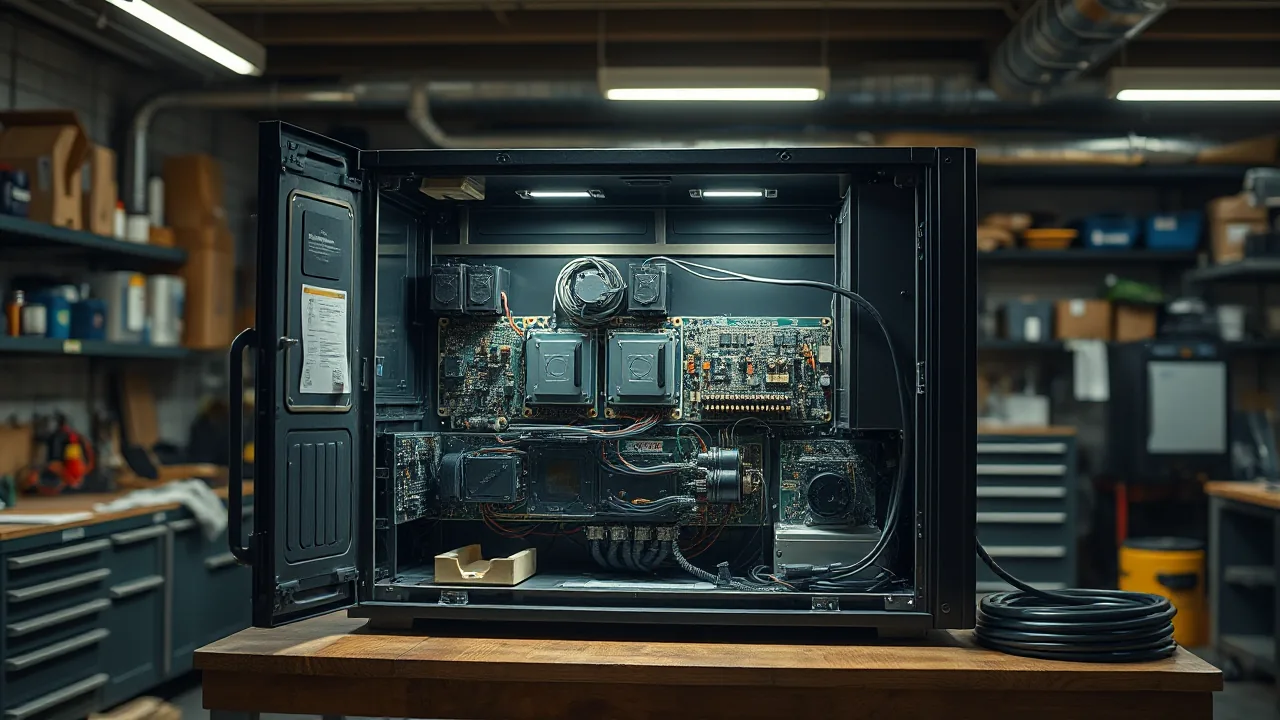
Hardware. One DGX Spark at ~€4,500 is the upper end. For smaller workloads (single freelancer, no real-time collaboration), a 64-GB Mac Studio or a Strix Halo workstation runs the same models at lower cost; see DGX Spark vs M3 Ultra Mac Studio for Local LLM for the trade-offs. The hardware lives in the newsroom or in the journalist’s home office, not in a colocated data center where physical access is harder to control.
Networking. No outbound traffic by default. The AI host is on a segmented VLAN with egress restricted to the newsroom’s internal services (identity, log aggregator). For source-side workflows that need anonymity beyond the newsroom’s own network, the relevant pattern is in Tor Hidden Service for Sovereign AI: When and How.
Models. Open-weights, no telemetry, the same Qwen 3.6 PrismaQuant or Mistral Small 4 stack documented in the rest of this corpus. For the comparison, see Mistral Small 4 vs Qwen 3.6 vs GLM 5 on DGX Spark.
Workloads. Document summarization (deposition transcripts, leaked corpora, FOIA productions), entity extraction (names, organizations, dates across a large set of documents), translation (machine-translation drafts of foreign-language source material the reporter then verifies), pattern surfacing (highlighting clusters of documents that mention the same people or transactions). None of these is “the AI decides the story.” The AI is a research-assistant layer on a corpus the reporter still reads.
Operational discipline. Document retention policies cover the AI’s intermediate artifacts the same way they cover the underlying source documents. The journalist’s existing source-protection protocols (secure deletion, compartmentalization, opsec for travel) extend to the AI host. The threat model is the same; the AI is just one more device in the inventory.
What I would do differently after a year of running this pattern
The pattern I described above is what I have running on my own hardware for my own research. I have not deployed it inside a working newsroom. The honest gaps in the framing above.
Operational training for journalists who are not infrastructure engineers is the hardest part. The technical configuration is one-time work; convincing a reporter on deadline to use the SecureDrop workflow instead of an email attachment is daily work. A newsroom deployment without a dedicated tooling person attached to it will degrade toward whatever workflow is easiest, which is often the least secure.
The international travel problem. Reporters cross borders with devices that contain source material. The on-premises AI host is fine; the laptop the reporter carries through customs is the actual attack surface. The architectural answer above does not solve the travel problem; the CPJ kit’s border-crossing guidance does.
The model-bias question on sensitive corpora. Open-weights models have training data biases that the reporter has to compensate for. A model that has been trained primarily on English-language English-speaking sources will be wrong about non-English political contexts in ways the reporter has to catch. The AI’s outputs are leads, not facts.
Where this fits
For the broader sovereignty framing, see What Sovereign Actually Means in 2026. For the threat-model toolkit on the network side, see Tor Hidden Service for Sovereign AI: When and How. For the cost framing, see Self-Hosted AI vs Cloud APIs: Real Total Cost. For the file-integrity-monitoring layer that catches tampering with the AI host itself, see AIDE + Tripwire for AI Boxes: When File Integrity Matters.
Book a Sovereign Deployment consultation
If your newsroom is evaluating AI for source-document analysis and the threat model above matches the work you do, the Sovereign Deployment engagement is the structured path. The Stack Audit (€450, two hours) produces a written recommendation that names the workflow gaps, the hardware fit, and the operational training the team will need. If the recommendation is to proceed, the deployment work follows at €2,400 per day; if the recommendation is to wait, the audit fee is the only cost. Press-freedom and small-newsroom rates are available; ask.
Find contact details in the footer (Nostr, email, GitHub).
The cloud AI shortcut is the wrong answer for newsroom work the same way the consumer-cloud shortcut was the wrong answer for source-document storage a decade ago. The threat model has not changed. The toolkit finally has.